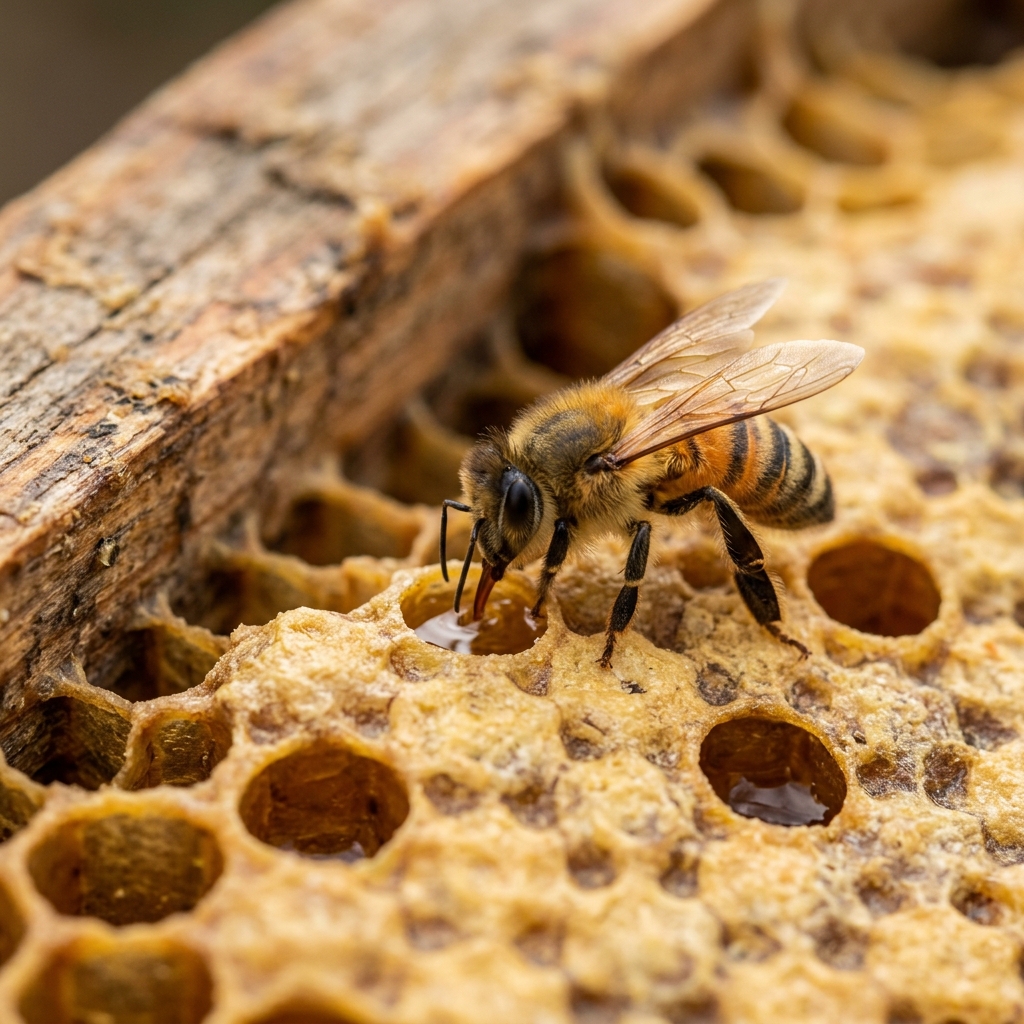
Varroa mites prefer drone brood over worker brood, since the longer capping period gives them more time to reproduce before the cell opens. Green drone comb takes advantage of that preference on purpose, luring mites into a concentrated trap you can remove and destroy.
This guide covers how it works, exactly where to place it in the hive, and how to use freezing to finish the job.
Why Drone Comb Works as a Trap
Drone cells take longer to cap over than worker cells, and mites reproduce inside capped cells. That extra time means more mites can complete their reproductive cycle in a single drone cell than in a worker cell. Green drone comb is foundation built with larger cells specifically sized for drones, so when it's placed correctly, the colony fills it almost entirely with drone brood instead of a mix of worker and drone cells.
That concentration is the whole point. Once that frame is capped, it's holding a disproportionate share of the hive's mite population in one place, ready to be pulled and dealt with as a batch instead of scattered throughout the brood nest.
Where to Place It
Placement matters more than people expect. Put it too far from the existing brood nest, and the colony often just fills it with honey or nectar instead of raising brood in it, since it doesn't read as part of the active brood area to them.
The right spot is at the outer edge of the current brood nest, right where worker brood is transitioning to drone territory. Bees naturally raise drones around the margins of the brood area, so a frame placed at that edge gets drawn out and used for drone brood far more reliably than one dropped in the middle or off on its own.
If you're not seeing much drone activity on it after a check or two, it's fine to reposition it slightly closer to or further from the brood nest based on what you're seeing, rather than assuming the first placement was permanent.
How to Freeze and Reuse It
Let the colony draw the comb out and fill it with drone brood. Once it's capped over, pull the frame and freeze it for about 24 to 48 hours. That's enough time to kill both the developing drones and the mites reproducing alongside them inside the capped cells.
After freezing, you can thaw it, let the colony clean it out, and put it back in the hive to repeat the cycle. Most beekeepers rotate through this several times over a season rather than treating it as a one-time step. I keep a couple of frames going at once so there's always one in rotation.
Discard the Debris Properly
If you're clearing out any old drone brood or comb debris while working with this, don't leave it out near the hive. Leftover brood and wax debris can attract small hive beetles, so bag it up or bury it away from the apiary instead.
A Realistic Expectation
Drone comb trapping reduces the mite population that would otherwise be reproducing in that brood, but it's a supplementary tool, not a complete mite management program on its own. Combining it with regular mite testing and other integrated approaches gives a more reliable overall result than relying on trapping alone. It pairs well with other non-chemical methods like caging the queen to break the brood cycle, or with an actual chemical treatment if your mite counts call for it. You can read more about how drone trapping fits into a broader control strategy on Penn State Extension's guide to integrated Varroa mite management.
Frequently Asked Questions
What is green drone comb used for?
It's foundation built with larger cells sized for drones, used to lure a colony into concentrating drone brood, and the mites that prefer to reproduce in it, into one removable frame.
Where should I place green drone comb in the hive?
At the outer edge of the current brood nest, where worker brood naturally transitions to drone territory. Placed too far from the brood nest, bees often fill it with honey instead of raising brood in it.
How long do I need to freeze the comb to kill mites?
About 24 to 48 hours is enough to kill both the developing drones and the mites reproducing in the capped cells alongside them.
Can I reuse the same frame more than once?
Yes. After freezing, thaw it, let the colony clean it out, and put it back in to repeat the cycle. Most beekeepers rotate through it several times in a season.
Is drone comb trapping enough to control mites on its own?
Not usually as a standalone method. It's a genuinely useful supplementary tool, but pairing it with regular mite testing and other management practices gives more reliable results than relying on it alone.