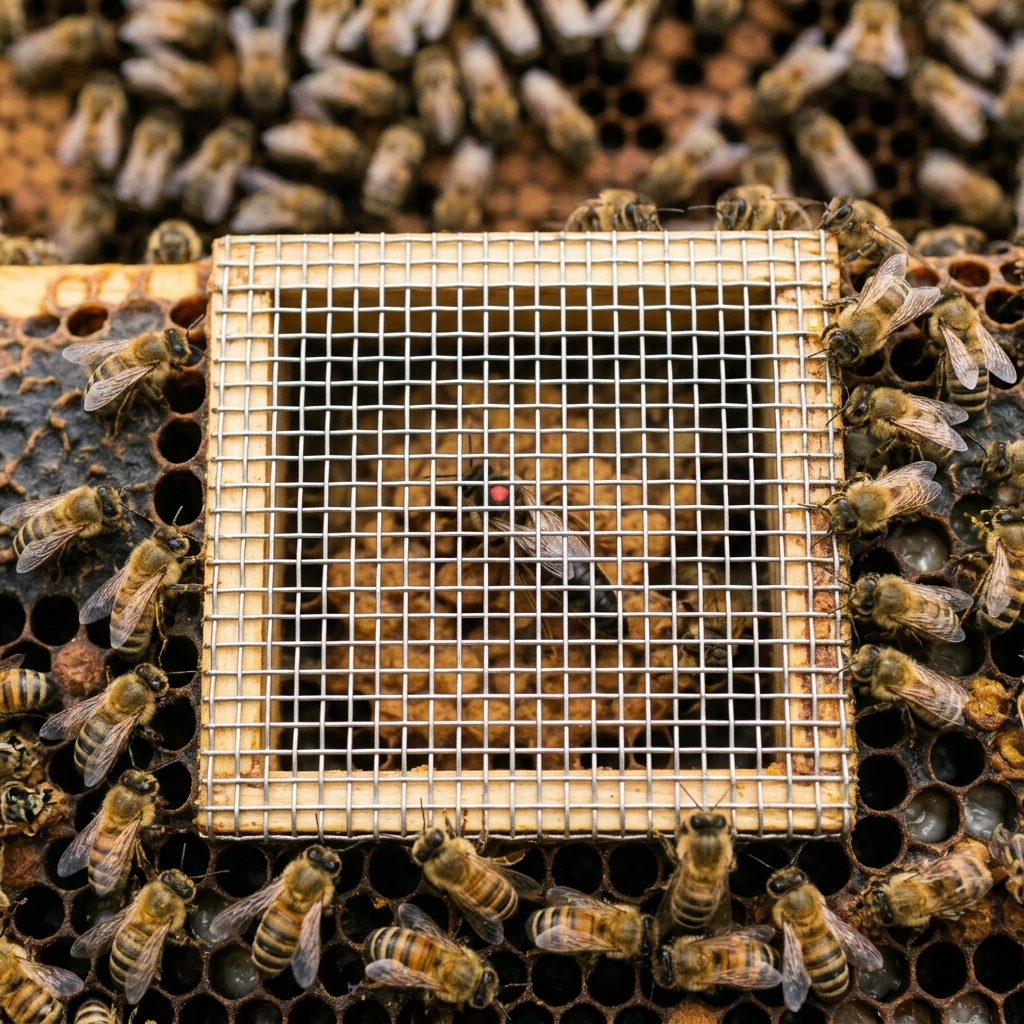
Once you've decided a colony needs a new queen rather than letting them raise their own replacement, a frame cage is one reliable way to introduce her. It lets worker bees get used to her scent gradually while she's protected, instead of releasing her directly into a colony that doesn't know her yet.
This guide covers marking her properly, setting up the frame cage, and what to expect while the colony adjusts.
When to Consider Requeening
If you've noticed a scattered brood pattern or other signs your current queen is failing, introducing your own queen gives you more control over timing and genetics than waiting for the colony to raise its own replacement. It's not always necessary. Plenty of colonies supersede successfully on their own, and it's worth checking for the specific signs covered in the guide on recognizing supersedure before deciding to intervene. But if you want to move faster or choose the genetics involved, this is the more hands-on option.
The Standard Queen Marking Color Code
Before introducing a new queen, it's worth marking her using the international color system, which rotates through five colors based on the last digit of the year: white for years ending in 1 or 6, yellow for 2 or 7, red for 3 or 8, green for 4 or 9, and blue for 0 or 5. A common way to remember the order is the phrase "Will You Raise Good Bees."
This system lets you tell a queen's age at a glance during future inspections, and it lets other beekeepers instantly understand her age too if you ever discuss or trade queens. Some beekeepers add a small secondary mark of their own on top of the standard color for personal tracking purposes, which is fine as long as the primary color still reflects the correct year.
How to Mark a Queen Safely
Catch her gently and hold her still using a proper queen marking tool rather than your fingers. Apply a small, neat dot of marking paint to the center of her thorax only, avoiding her eyes, wings, and head entirely. Let the paint dry for a few seconds before releasing her back onto the frame. For more detail on locating her efficiently and handling her safely in general, see the guide on finding and handling your queen.
Marks Can Wear Off Over Time
Don't assume a queen has been replaced just because you can't find her mark on a later inspection. Bees will sometimes rub a mark down over weeks or months until only a faint rim of color remains around the base of the thorax. Before concluding your marked queen is gone, look closely for that faint remaining trace rather than assuming an unmarked queen must be a new one.
Introducing Her With a Frame Cage
Set her up in the cage. Place the queen inside a frame cage made of excluder-style mesh, attached directly to a frame of the hive she's going into.
Let workers interact through the mesh. The mesh allows worker bees to pass through and interact with her, feeding her and picking up her scent, without being able to harm her directly. This is what builds acceptance over time.
Seal any gaps. Check the edges and top of the cage carefully. Queens can squeeze through surprisingly small openings, so taping any visible gaps is worth the extra few minutes.
Place the frame back in the hive. Position it in the brood area alongside the other frames, then close everything up.
Give it time before checking. Wait several days to a week or more before checking on acceptance. Look for calm behavior from the workers around the cage rather than clustering or balling, which would signal continued rejection, though balling isn't always as straightforward to interpret as it seems. See the guide on what balling actually means before assuming the worst.
A Note on Genetics When Requeening
If a queen is being replaced because of poor performance, it's worth thinking about where the replacement's genetics come from. In my view, letting a colony raise its own replacement from a failing queen's own eggs means whatever trait caused the problem could carry through to the next generation too. Introducing a queen from different, known-good stock sidesteps that risk, though this is a judgment call more than a hard rule, and plenty of beekeepers are comfortable either way.
Vented vs. Unvented Cages
Check which way your cage is meant to face before installing it. Most have a marked side indicating vented versus unvented orientation, and installing it backward can affect airflow to the queen inside. It's worth a quick check every time rather than assuming.
This connects to a similar quirk with full-size queen excluders on honey supers: bees generally won't start drawing brand new foundation through an excluder. Many beekeepers add the super without the excluder first, let the bees begin drawing comb, then add the excluder once they're started, a consideration covered in more detail in the guide on top supering versus bottom supering.
How Long Can a Queen Wait in Her Shipping Cage?
If weather or timing forces a delay before you can get a mailed queen installed, she can typically hold on longer than people expect, especially if she has attendant workers in the cage with her feeding her. A tiny dab of honey or a drop of water added daily can help tide her over, along with any queen candy already in the cage.
Go easy on the honey, though. Too much can get the attendant bees sticky enough to clog their spiracles, the small breathing openings along their bodies, which can kill them. A small amount is enough to help without creating a mess. Even with good care, get her installed as soon as reasonably possible. Isolation is genuinely harder on a queen and her attendants than being part of a full colony, so don't let a manageable delay turn into an unnecessary week of waiting.
Queen Marking Color Chart
Swipe sideways on the table below if you're on a phone and it doesn't fit your screen.
| Year Ends In | Color |
|---|---|
| 1 or 6 | White |
| 2 or 7 | Yellow |
| 3 or 8 | Red |
| 4 or 9 | Green |
| 0 or 5 | Blue |
For a deeper reference on the history and reasoning behind the system, see Torbay Beekeepers' overview of queen marking colours.
Frequently Asked Questions
What color should I mark my queen this year?
Match the last digit of the current year to the international color chart: white for 1 or 6, yellow for 2 or 7, red for 3 or 8, green for 4 or 9, and blue for 0 or 5.
How long does it take a colony to accept a new queen?
It varies, but giving it at least several days to a week before checking is a reasonable minimum. Look for calm behavior around the cage rather than clustering or balling as your sign of acceptance.
Will the queen escape from a frame cage?
She can if there are gaps in the seal, since queens can fit through surprisingly small openings. Taping the edges and checking the top seam carefully before closing the hive back up reduces that risk significantly.
Should I always replace a failing queen with new genetics?
Not necessarily, but it's worth considering if the queen's poor performance might be a trait that could pass to a daughter queen raised from her own eggs. Some beekeepers prefer known genetics for this reason, though letting a colony raise its own replacement also works well in plenty of cases.
Can worker bees hurt the queen through the cage mesh?
The mesh is sized so bees can interact, feed, and pick up her scent without being able to sting or seriously harm her, which is the whole point of using a cage rather than releasing her directly.
Will I be able to tell if my marked queen has been replaced?
Usually, but not always right away. Marks can wear down over weeks or months until only a faint trace remains, so check closely for a faint rim of color before assuming an unmarked queen must be a new one.
How long can a mailed queen wait in her cage before I install her?
Longer than people expect if she has attendants feeding her, especially with a small daily dab of honey or water added. Even so, install her as soon as reasonably possible, since isolation is harder on her than being part of a colony.