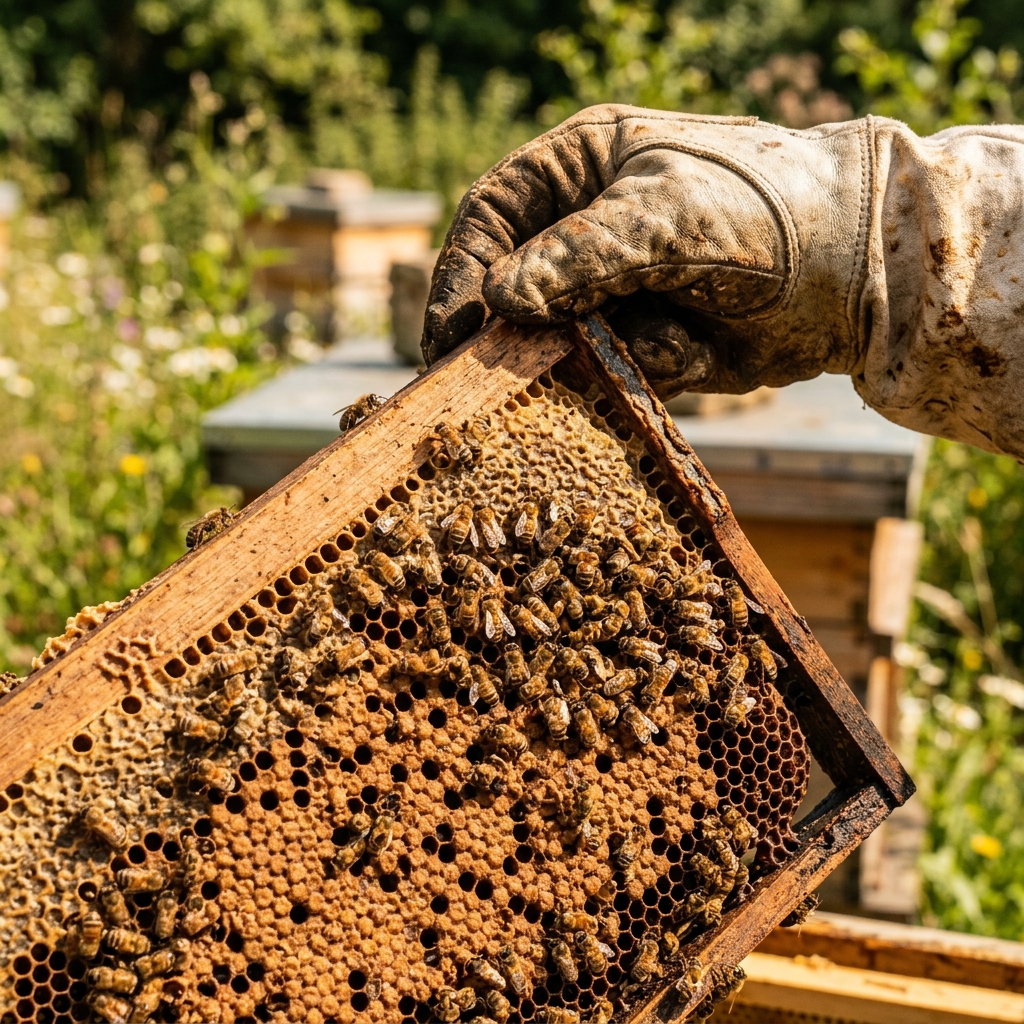
July is a turning point in the beekeeping year. Nectar flow starts to shift, mite numbers begin climbing fast, and whatever you do this month shapes how strong your colony is going into fall.
This checklist covers the things worth checking on right now: nectar flow, food stores, mites, small hive beetles, your queen, heat and water, and robbing risk. If you're catching up, the guide to the June beekeeping checklist covers what typically comes just before this.
July Beekeeping Checklist at a Glance
Swipe sideways on the table below if you're on a phone and it doesn't fit your screen.
| Task | Why It Matters |
|---|---|
| Check nectar flow | Tells you how much longer to leave honey supers on |
| Check food stores | Low stores now mean starvation risk later |
| Test mite levels | Mites multiply fast alongside brood in July |
| Check for small hive beetles | Warm, humid weather is peak beetle season |
| Check the queen's brood pattern | A failing queen is easier to fix now than in fall |
| Provide water and shade | Summer heat stresses the whole colony, and you |
| Watch for robbing | Weak colonies become targets once nectar slows down |
Testing Mite Levels in July
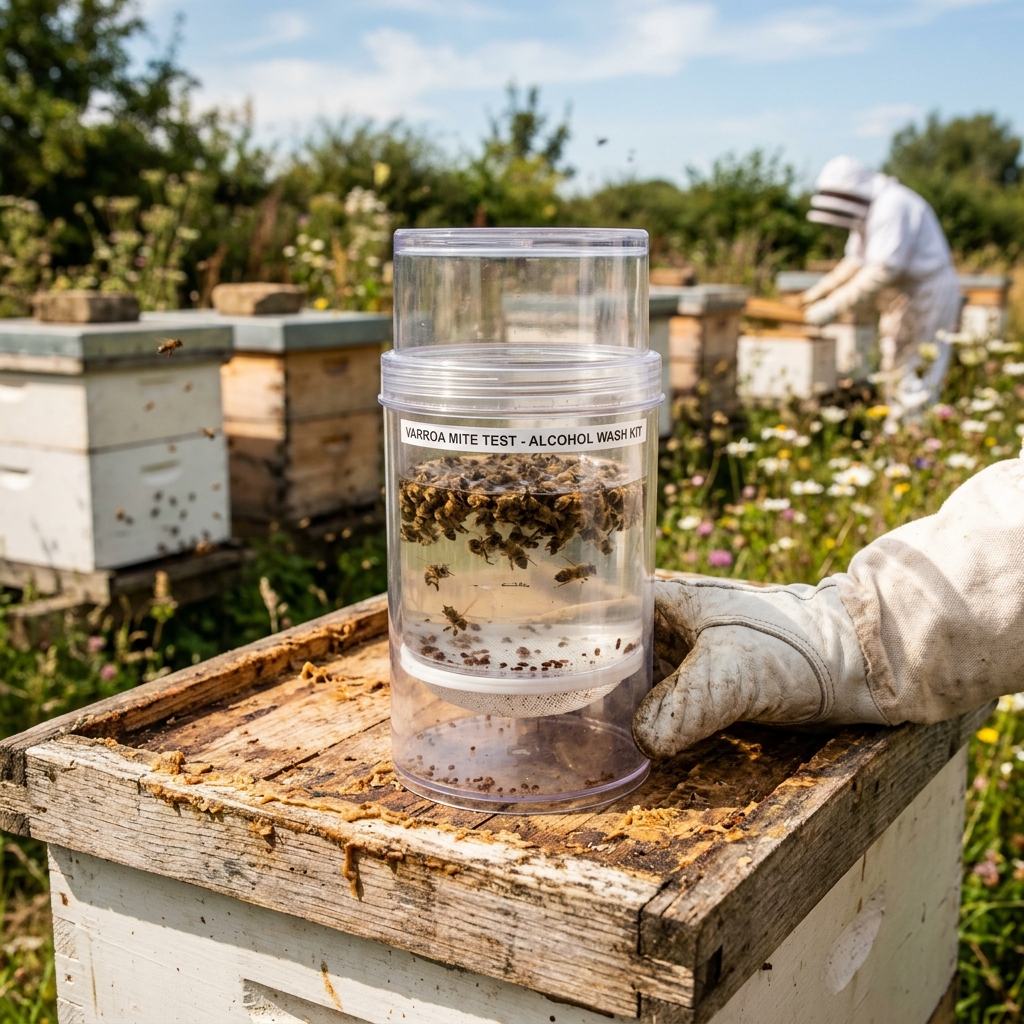
July is when varroa mite populations typically start climbing at their fastest rate, alongside the peak brood cycle. Running an alcohol wash or sugar shake test this month is critical to catch mite spikes early, before the bees that will form your winter cluster start rearing.
Managing Summer Heat & Ventilation
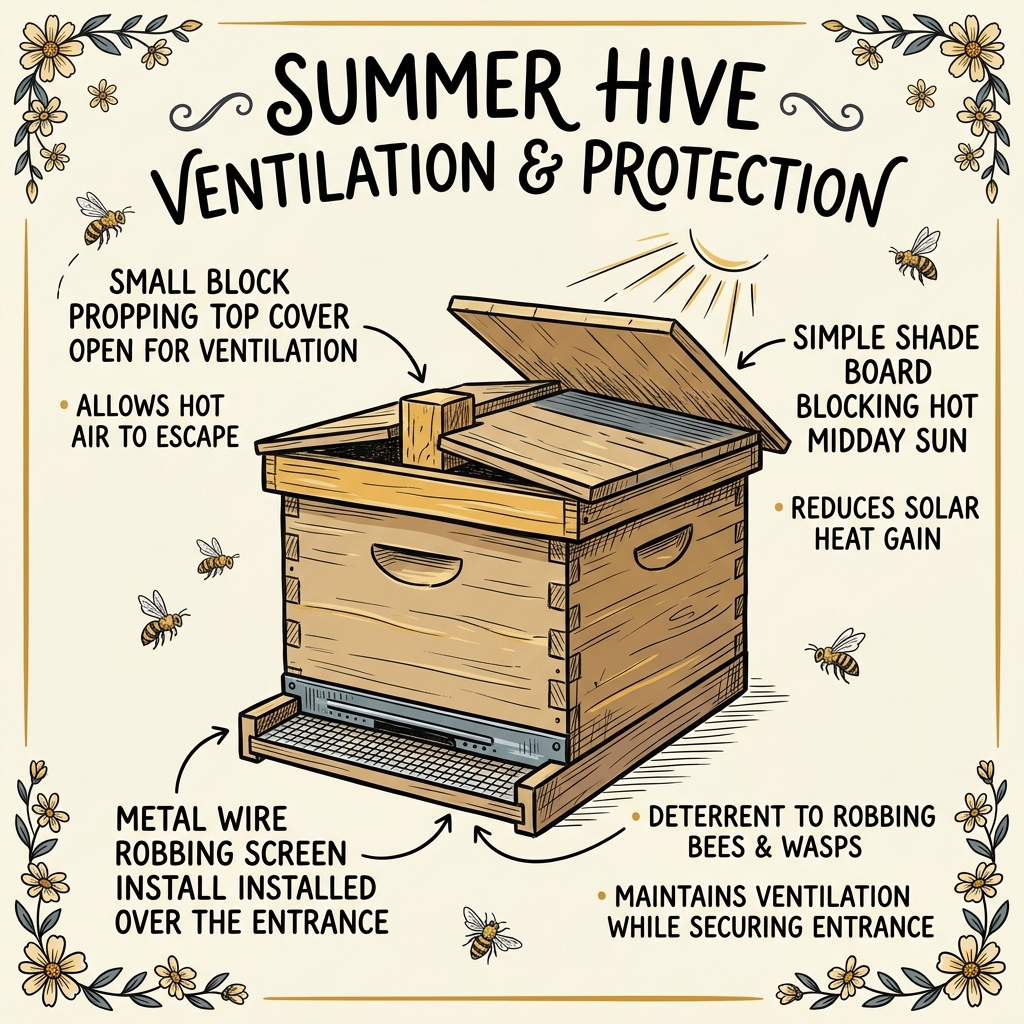
High summer heat puts substantial stress on a colony, forcing workers to fan actively and haul water rather than forage for honey. Supporting their cooling efforts by propping the outer cover or adding a screened bottom board helps them maintain hive homeostasis.
Check Your Nectar Flow
In many parts of the country, nectar flow starts to drop off in July. In other regions, especially where clover and other summer plants are still blooming, the flow can keep going strong into August.
You don't need fancy equipment to get a rough read on this. Just watch the entrance of your hive.
Count how many bees fly in and out over 60 seconds. If you lose count because there are too many coming and going, that's a strong flow. If you can easily count them one by one, slow and sparse, the flow is winding down.
Early morning counts will look lighter than midday, since bees pick up activity as the sun warms the hive. For a fair read, check a few times throughout the day rather than relying on one early count.
This matters because it tells you how much longer to leave your honey supers on. A strong flow means more time for bees to fill and cap frames. A fading flow means it's close to time to pull supers and start thinking about fall prep. I've caught myself about to pull supers too early more than once, just by taking sixty seconds to actually count instead of guessing.
Heavy rain can throw your count off temporarily. It tends to wash nectar out of flowers, and it can take a day or two after a storm for things to recover. Some flowers won't produce a second round of nectar after that initial wash-out, while others keep going. If your count looks unusually low right after a storm, it's worth checking again in a day or two before assuming the flow has actually ended.
Check Your Food Stores
Open up the brood area and take a look at what's stored around it. You want to see good amounts of capped honey or nectar, along with bee bread and pollen near the brood. Bees need that pollen to keep raising new brood through the rest of the season.
Many beekeepers like to leave one medium honey super on top of the main brood boxes for winter reserves, even if supplemental feeding happens later in the year. Taking too much honey off in summer tends to catch up with a colony later.
If your stores look thin this early, take note. Regions with a short nectar flow may need to start supplemental feeding well before fall. Watch what's happening locally and don't wait until the hive is already running low.
If you're trying to get new frames drawn out with wax, this is a good month to do it while the flow is still active. Some beekeepers speed this along by alternating drawn frames with undrawn ones, which encourages the colony to build out comb faster.
Monitor Your Mite Levels
July is a critical month for varroa mites. As brood production ramps up, so does the mite population, since mites reproduce inside capped brood cells right alongside developing bees.
The most reliable way to check is an alcohol wash mite test. You collect a sample of bees, shake them in alcohol, and count how many mites fall out.
A common treatment threshold is 3 mites per 100 bees. Ideally you want to see numbers well below that, closer to 0 or 1 or 2. If your count comes in above 3, it's time to treat.
This matters because mites don't just weaken bees directly. They spread viruses between bees, and those viruses are often what actually take a colony down over winter. Getting mite counts under control in July gives your bees a much better shot at making it through the cold months. If your count comes back high, see the guides on chemical Varroa treatments, or the non-chemical options covered in queen caging for a brood break and green drone comb trapping.
I try to test more than once during the growing season, not just in July, since mite counts can climb quickly between checks, especially while brood production is at its peak.
For a detailed walkthrough of the alcohol wash procedure and current threshold research, university extension programs publish solid reference material, including this guide from Mississippi State University Extension.
Watch for Small Hive Beetles
Warm, humid July weather is prime conditions for small hive beetles. Adult beetles sneak into the hive, lay eggs, and the larvae that hatch tunnel through comb, feeding on honey, pollen, and brood as they go.
A strong, well-populated colony can usually keep beetle numbers under control on its own, since bees will chase and corner beetles they find. Weaker colonies with fewer bees to patrol the hive are much more vulnerable.
A few habits help keep beetles in check. Placing a small hive beetle trap inside the hive catches adults before they get a chance to lay eggs. Keeping your entrance reduced to match the size of your colony also limits how easily beetles can get in and out unnoticed.
Check Your Queen's Performance
Take a look at the brood pattern while you're in the hive. A solid, consistent pattern of capped brood is a good sign. A spotty, scattered pattern can point to a resource shortage or a queen that's starting to fail, one of the signs covered in more depth in the guide on recognizing supersedure.
Look for fresh eggs too, not just capped brood. Eggs tell you the queen was active recently, even if you don't spot her directly.
If something looks off, don't wait. You still have time in July to requeen, whether you raise your own queen or buy one. See the guide on introducing a new queen with a frame cage for the technique. Waiting until later in the season narrows your options and gives the colony less time to recover before fall.
Beat the July Heat
Hot weather adds real stress to a colony, and there are a few simple things that help. It's worth protecting yourself from the heat too, not just your bees. For a deeper look at genuinely extreme heat and what it does to a colony, see the guide on protecting bees during extreme heat.
Provide Water
Bees need a steady water source in summer, and they are not strong swimmers. Set out a shallow water source, like a bee watering station or a birdbath, with rocks or pieces of wood inside so bees have somewhere to land without drowning.
Add Shade
Direct afternoon sun can push hive temperatures up fast. A simple board, a piece of cardboard, or a dedicated hive shade cover propped over the hive during the hottest part of the day makes a noticeable difference.
Improve Ventilation
Propping the outer cover open slightly, even with something as small as a stick or a coin, adds airflow and helps the colony manage heat without extra effort.
Protect Yourself Too
July heat is hard on you, not just your bees. Drink water before and during an inspection, and try to work hives in the early morning or evening instead of the hottest part of the afternoon.
If you start to feel dizzy, nauseous, or unusually tired while suited up, stop, get to shade, and cool down before continuing.
Watch for Robbing
Robbing happens when bees from other colonies try to steal honey stores, usually once local nectar starts to dry up. Weaker colonies with fewer guard bees are the most common targets.
A robbing screen is a simple, effective defense. It forces bees to find their way through an offset entrance, which confuses robbers while your own bees quickly learn the new path in and out.
Put a robbing screen on before you actually need it, ideally as soon as you notice nectar starting to slow down. Once robbing starts in earnest, it's much harder to stop. For the full picture on why timing matters so much here, see the guide on preventing robbing before it starts.
Think Ahead to Winter
It's easy to think of July as just another summer inspection month, but what you do now sets up your colony's strength in August. August strength sets up September. September sets up how well the colony goes into winter.
Getting mites and beetles under control, making sure food stores are solid, and confirming your queen is laying well all matter more in July than they might seem to in the moment. Handling these now, while there's still time to fix problems, beats scrambling to fix them once the weather turns.
Frequently Asked Questions
How do I know if my nectar flow is ending in July?
See the counting method above for exact steps. As a quick gauge, heavy traffic you can't keep up with counting means the flow is still strong, while a slow trickle you can easily count means it's winding down and supers can start coming off soon.
Do I need to feed my bees in July?
It depends on your region and what your food store check shows. Areas with a short nectar flow may need supplemental feeding earlier than areas where flowers keep blooming into August. Check pollen and honey stores directly in the brood area rather than assuming based on the calendar alone.
How many mites is too many in July?
A common treatment threshold is 3 mites per 100 bees, covered in more detail above. Beyond the July check, it's worth testing every few weeks through the rest of the growing season, since counts can climb quickly between checks, especially as brood production peaks.
What does a spotty brood pattern mean?
A spotty pattern usually points to a resource shortage or a failing queen, as discussed above. It's also worth ruling out disease, since some brood diseases can produce a similar scattered look. If mite counts are high too, or something about the brood looks off beyond just gaps, it's worth a closer look or a second opinion from an experienced beekeeper.
Why are bees attacking a nearby hive in late summer?
This is usually robbing behavior, covered in more detail above. Signs to watch for include bees fighting at the entrance, wax cappings scattered on the ground or bottom board, and unusually aggressive bees bumping into you near the hive. Getting a robbing screen on early is far easier than stopping robbing once it's already underway.
How much water do bees need in the summer?
A steady water source matters more than people expect once summer heat sets in, as covered above. Setting one up before bees find a less ideal source, like a pool or a puddle with chemicals in it, helps keep them coming back to the right spot instead.