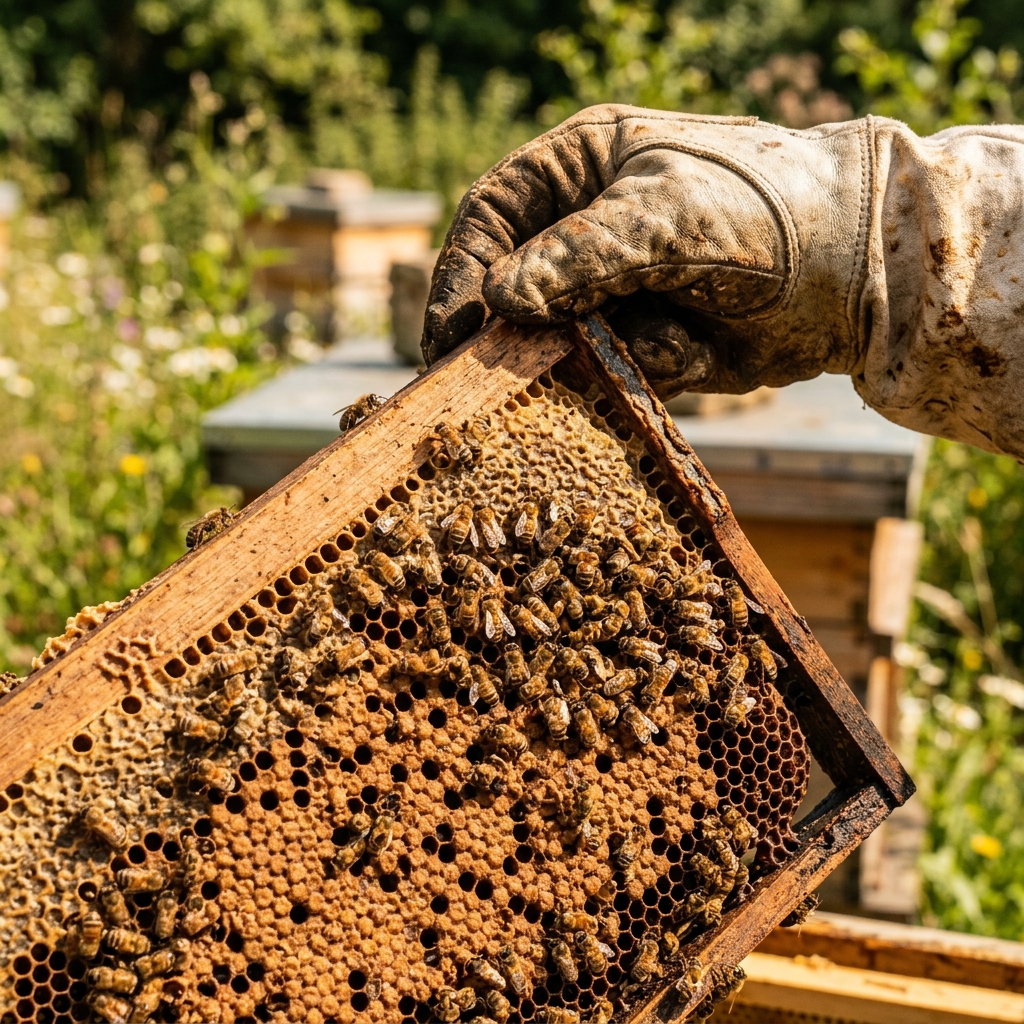
June sits right after peak swarm season for a lot of the country, but the work isn't over. This month is about confirming your hives came through swarming intact, giving them room to keep expanding, and getting ahead of problems that show up later in the summer.
June Checklist at a Glance
Swipe sideways on the table below if you're on a phone and it doesn't fit your screen.
| Task | Why It Matters |
|---|---|
| Watch for swarm cells | Swarming can still happen into summer and fall |
| Confirm requeening succeeded | A failed requeen after swarming costs weeks you can't get back |
| Add supers and give room to expand | Too little room slows growth, too much causes chimneying |
| Stay ahead of mites | Mite damage done now affects winter bees later |
| Get robber screens on hand | Prevention only works if it's in place before robbing starts |
Stay Ahead of Mites in June
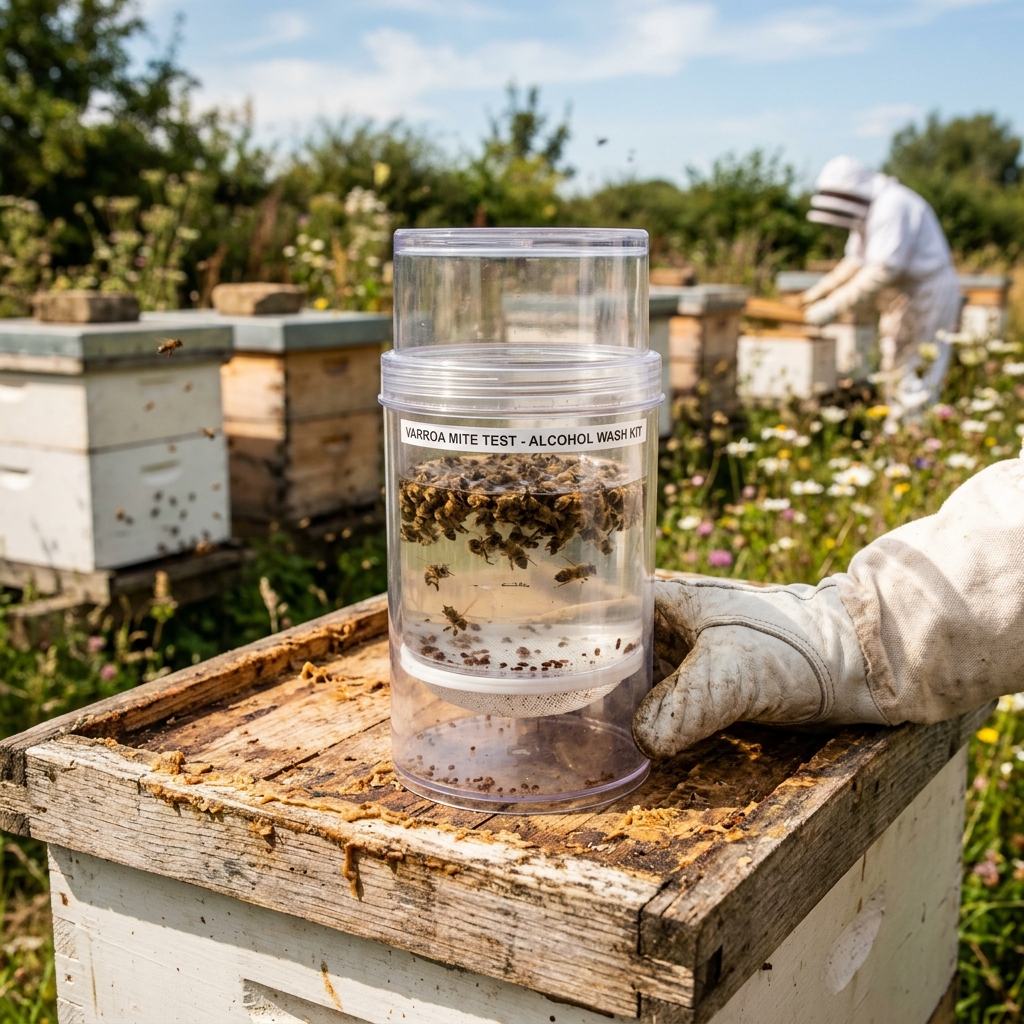
While swarming and colony growth dominate your time in June, varroa mites are also breeding rapidly in the expanding drone and worker brood. Establishing a baseline mite count now using a standard shaker kit ensures you're prepared to treat if populations cross the safe threshold.
Keep an Eye Out for Swarming
Swarming usually slows down by June in a lot of regions, but it doesn't stop entirely. Bees can still swarm in June, July, or even into fall. You don't need to inspect as aggressively as you might have in spring, but it's still worth checking for swarm cells during regular inspections rather than assuming the season is over.
Confirm Your Hive Successfully Requeened
If a hive swarmed, the colony left behind has to raise a replacement queen, and that process has real points of failure. Confirm three things: did they successfully raise a queen, did she complete her mating flight or flights, and is she now laying with a solid brood pattern.
If she isn't laying and there are no eggs to raise a replacement from, don't wait around. Buying a mated queen and introducing her is usually the better call at that point, since waiting for the colony to try again can cost you another 30 days, and population keeps declining the whole time.
There's an important exception, though. If you find supersedure cells already started, meaning the colony is in the process of replacing its own queen on its own initiative, I'd generally let them finish rather than tear it down and introduce a purchased queen. In my experience, a colony that's already committed to raising its own replacement is less likely to accept an outside queen you try to force in at that point, so it often works out better to let them finish what they started. For the full technique on introducing a queen when you do want to intervene, see the guide on introducing a new queen with a frame cage.
Add Honey Supers and Give Room to Expand
Get honey supers on in June if you haven't already, so bees have time to draw out wax while conditions are good. Don't expect much honey from a brand new colony their first year. Bees have to consume roughly eight pounds of nectar or honey to produce a single pound of wax, so a first-year colony is spending most of its incoming resources on building comb rather than storing surplus. By the second year, once comb is already drawn, incoming nectar can go straight into storage instead.
A simple rule of thumb for adding the next box: once about half the frames in the current box are drawn out and being used, it's time to add another. Adding all your boxes at once tends to cause bees to move straight up through the stack instead of spreading out, sometimes called chimneying, rather than filling things out evenly. Where exactly that new box goes, on top of the stack or underneath, closer to the brood nest, is its own decision worth thinking through. See the comparison of top supering versus bottom supering for the tradeoffs.
Stay Ahead of Mites
Even if your hive looks fine on the outside, mite damage happening now shows up later, particularly in the health of the winter bees your colony raises in the fall. Regular testing and a treatment plan matter more in June than it might feel like they do. For a look at chemical treatment options and how they compare, see the guide on chemical Varroa mite treatments. For non-chemical approaches, see the guides on queen caging for a brood break and using green drone comb as a mite trap.
Get Robber Screens on Hand Now
Robbing season typically hits in July or August for most regions, once nectar sources dry up. The habit worth building in June is getting robber screens on hand well before you actually need them, since prevention only works if it's already in place. For the full picture on why timing matters this much, see the guide on preventing robbing before it starts.
Frequently Asked Questions
Do bees still swarm in June?
Yes, though it typically slows down compared to spring. Swarming can still happen into July and even fall, so it's worth checking for swarm cells during regular inspections.
What do I do if my hive didn't successfully requeen after swarming?
If there's no queen laying and no eggs to raise a replacement from, buying a mated queen and introducing her is usually faster than waiting for another attempt, which can cost another 30 days of population decline.
Should I introduce a purchased queen if I find supersedure cells already started?
Generally no. A colony already committed to raising its own replacement is often less likely to accept an outside queen. Letting them finish what they started tends to work out better.
How do I know when to add another honey super?
Once about half the frames in the current box are drawn out and being used, it's time to add the next one. Adding all your boxes at once can cause bees to move straight up the stack instead of spreading out.
Why shouldn't I expect much honey from a new colony's first year?
New colonies spend most of their incoming nectar making wax to draw out comb, roughly eight pounds of nectar per pound of wax, leaving less left over for surplus honey until the following year.