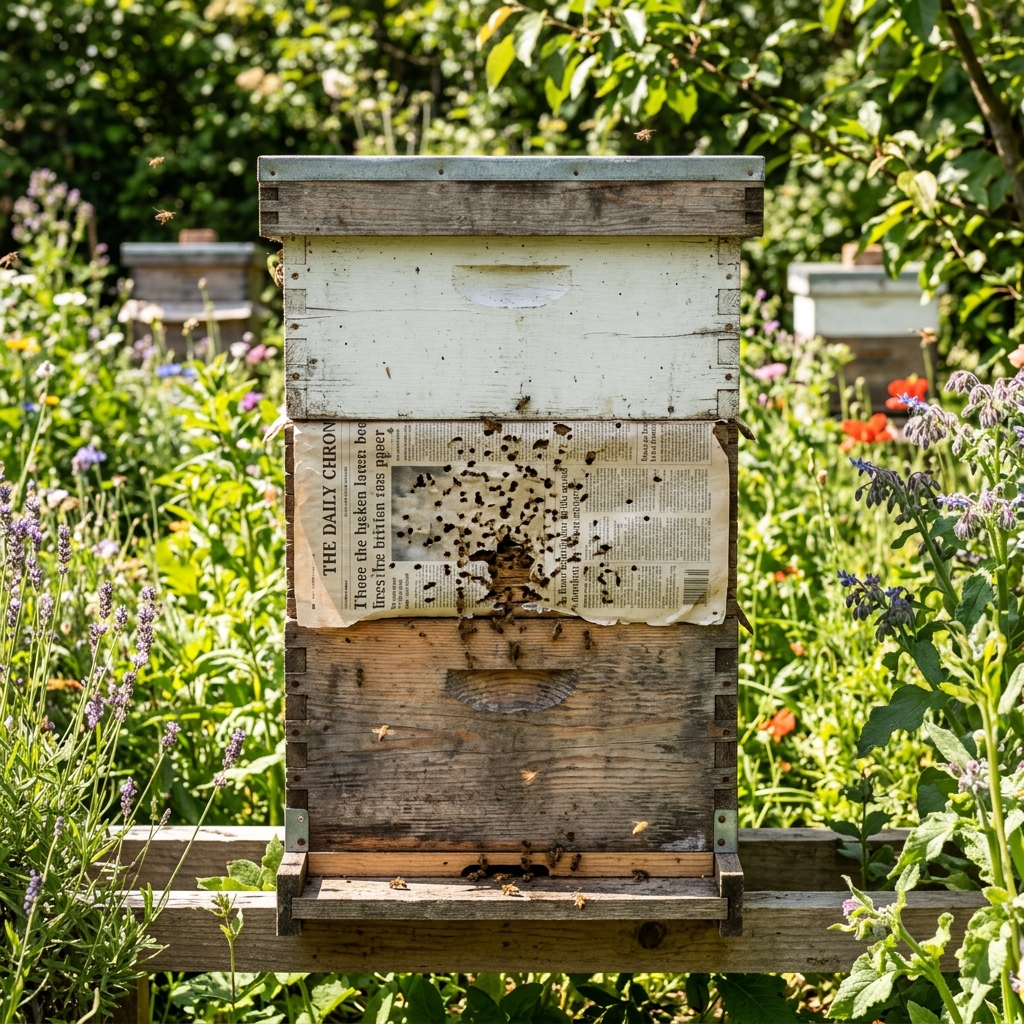
Combining two colonies comes up more often than new beekeepers expect: a queenless hive that needs a boost, a caught swarm that needs a home, or a mismatched nuc that won't fit where you want it. The newspaper method is the standard, low-drama way to do it.
This guide covers the basic technique and how to apply it to a few common real-world situations.
The Basic Technique
Stack one colony directly on top of the other, with a single sheet of newspaper laid between the two boxes. Cut a couple of slits in the paper first so the process gets started a little faster. Bees on both sides gradually chew through the paper over a day or two, and by the time they meet, they've picked up enough of each other's scent that they combine peacefully instead of fighting.
This works whether you're combining a queenless colony with a queenright one, or two colonies that are both queenless and just need more numbers together.
Combining a Mismatched Nuc Into a Full-Size Box
A common point of confusion is what to do when a small nuc, say three frames, needs to join a full ten-frame box. The nuc box itself is too narrow to just set on top and combine directly. Don't try to build adapters or spacers to make the mismatched boxes work together. Instead, move the frames out of the nuc and into a full-size box that actually matches the hive you're combining with. Add empty frames alongside them if needed to fill out the box. Once the frame count and box size match, treat it exactly like any other newspaper combine.
Combining a Caught Swarm With Its Original Hive
If you've requeened an aggressive hive and then caught a swarm that came from that same original colony, you can combine them back together once the requeened hive has settled down. Put one colony in a full box, the other in a second box, and combine them with newspaper the same way. Give it a day or two, and they'll generally sort themselves out into one functioning colony.
What to Expect During the Process
Once the paper is in place and the boxes are stacked, leave them alone for a day or two rather than checking repeatedly. The chewing-through process is what actually blends the two colonies' scents together, and disturbing it too early can undo that progress. After a couple of days, you can check to confirm the paper is mostly gone and the colony is behaving as one unit. I've combined hives this way more times than I can count, and I still find it a little satisfying every time two separate colonies just quietly become one.
Frequently Asked Questions
How does the newspaper method actually work?
A sheet of newspaper between two stacked colonies slows their initial contact just enough that bees on both sides pick up each other's scent while chewing through it, which lets them combine without fighting.
How long does it take for two hives to combine?
Usually a day or two for the bees to chew through the paper and settle into one working colony.
How do I combine a nuc with fewer frames than a full-size box?
Move the nuc's frames into a full-size box that matches the hive you're combining with, adding empty frames if needed, rather than trying to adapt the mismatched box sizes to fit together directly.
Can I combine two queenless colonies together?
Yes, the newspaper method works for that too, though it's usually better to combine a queenless colony with a queenright one if you have that option, so the resulting colony isn't left without a queen at all.
Should I check on the hives while they're combining?
Leave them alone for a day or two. Opening things up too early disrupts the scent-blending process the paper barrier is there to support.