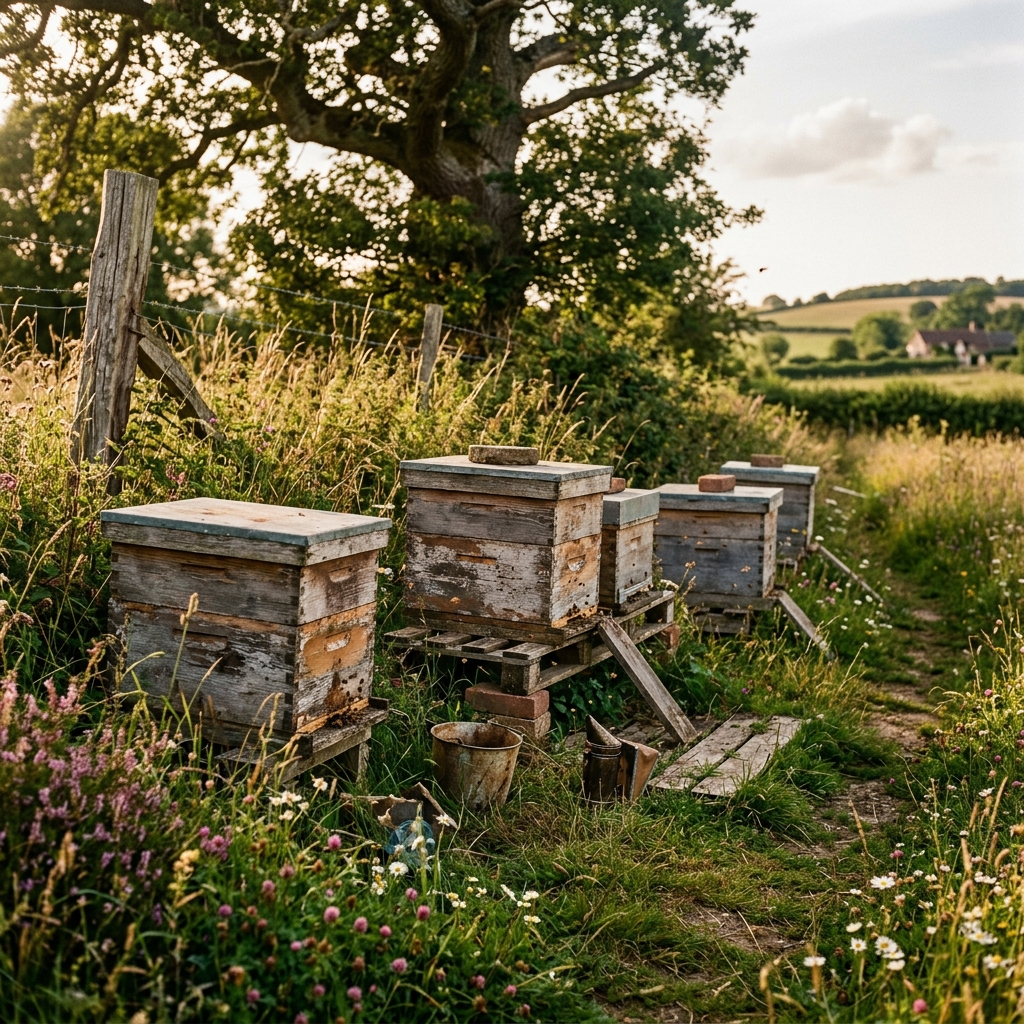
Opening a honey super expecting straight nectar and honey, then finding brood instead, is more common than people expect. It doesn't mean anything is seriously wrong, and it definitely doesn't mean starting over.
This guide covers why it happens and the straightforward fix, whether or not you actually find the queen herself up there.
Why This Happens
Bees can move honey out of frames and down into the brood nest almost overnight to free up space, sometimes clearing out what looked like a fully capped frame just days earlier. Once that space opens up, the queen can slip into it and start laying, even in a super you checked recently and assumed was settled.
Don't assume a super is queen-free just because it looked fully capped a few days ago. That can change fast, and it's worth a real check rather than relying on what you remember from your last inspection. This scenario comes up especially often with bottom supering, where the new space sits right against the brood nest. See the comparison of top supering versus bottom supering for more on that tradeoff.
Check for Eggs Before Searching for Her
Scan for eggs before trying to spot the queen directly. Eggs confirm she's been on that frame recently, which tells you what you need to know even if you never actually see her. For the full approach to searching efficiently and handling her safely if you do find her, see the guide on finding and handling your queen.
The Fix: Add a Queen Excluder Above the Brood Nest
You don't need to tear the hive apart or panic about lost honey production. Simply install a queen excluder between the true brood nest and the super that now has brood in it. The existing brood up top will finish developing and emerge over the following few weeks, and once that happens, she can no longer access that box at all. From that point forward, it naturally converts into a normal honey storage super. I've solved this exact situation more than once just by adding the excluder and walking away, without ever finding her.
If You Do Find Her Up There
If you actually spot her in the super, you have two straightforward options. You can pick her up, using the thorax or wing hold described in the guide on handling a queen safely, and set her down near the entrance so she can walk back into the hive on her own. Or, if you'd rather not touch her directly, gently brush or shake her off the frame while holding it just above the true brood box, letting her drop down into the right spot without ever making contact.
A Note on Queen Excluder Types
Queen excluders generally come in three styles: all metal, all plastic, or a wood-bound frame with metal wire in the middle. All three do the same job. Plastic tends to be the lightest option, which is why a lot of beekeepers default to it, but metal and wood-bound versions work just as well if you prefer them.
Frequently Asked Questions
Why did I suddenly find brood in my honey super?
Bees can move honey out of frames almost overnight to make room, and the queen can slip into that newly opened space and start laying, even in a super that looked fully capped just days before.
Do I need to find the queen to fix this?
No. Adding a queen excluder between the brood nest and the affected super works whether or not you actually locate her. The existing brood will finish emerging, and the box becomes a normal honey super afterward.
How long until the honey super is brood-free again?
A few weeks, roughly matching the time it takes existing worker brood to fully emerge, since no new eggs can be laid there once the excluder is in place.
What if I actually find the queen in the super?
You can pick her up by the thorax or wings and set her near the entrance to walk back in, or gently brush her off the frame directly above the true brood box so she drops down without being touched.
Does it matter what kind of queen excluder I use?
Not much functionally. All metal, all plastic, and wood-bound metal versions all work. Plastic is the lightest option, which is why many beekeepers prefer it, but the others work just as well.