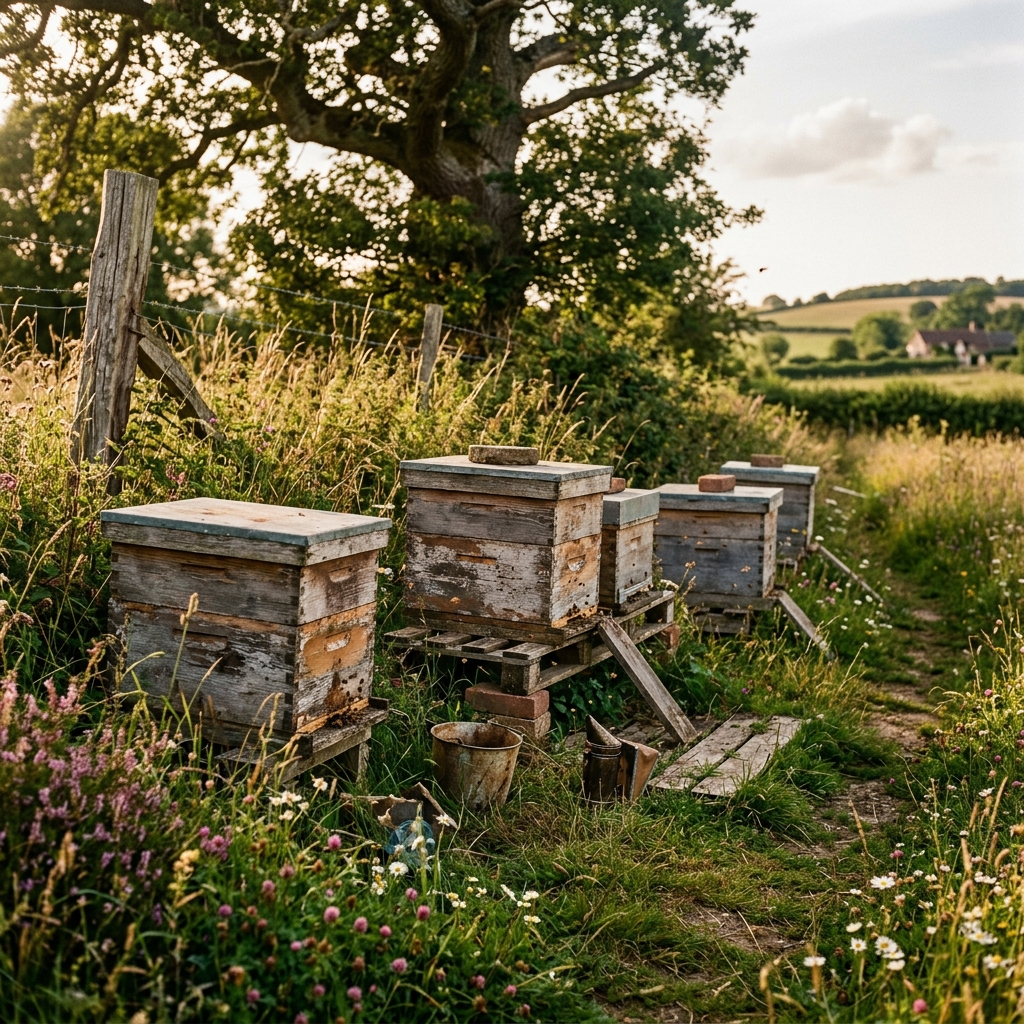
Supersedure is when a colony quietly decides to replace its own queen, usually because she's failing, without any drama or swarming involved. The signs are subtle enough that a lot of beekeepers miss them the first time, or mistake them for something more alarming than they actually are.
This guide covers what a supersedure cell actually looks like, how to tell it apart from other brood oddities, and what it means when you find eggs and replacement cells in the same hive at the same time.
What a Supersedure Cell Looks Like
Supersedure cells are usually found on the face of the comb, often toward the middle of the frame, and there are typically only one to three of them at a time. This is different from swarm cells, which tend to hang from the bottom edges of frames and usually show up in larger numbers. If your hive shows swarm cells specifically, along with a sudden drop in population, see the guide on telling a swarm-recovering hive apart from a genuinely failing one.
Location is a strong guide, not an absolute rule. Experienced beekeepers will tell you they've occasionally found cells in unexpected spots that didn't follow the usual pattern. Use it as your first clue, then look at the bigger picture: how many cells there are, what the surrounding brood pattern looks like, and whether the colony seems to be preparing to divide or just replacing leadership. You can read more about the distinction on Honey Bee Suite's guide to swarm versus supersedure cells.
Why Bees Might Still Have a Laying Queen AND Supersedure Cells
It can look contradictory at first. You find fresh eggs, which means a queen is actively laying, but you also find one or two supersedure cells with larvae developing inside them. That's not a mistake on the colony's part.
Bees don't always wait until a queen is completely gone before starting her replacement. If her brood pattern has gone scattered or her laying rate has slowed, the colony may begin raising a new queen while the current one keeps working in the meantime. It's a hedge, not a failure of communication among the bees.
Don't Confuse Drone Brood With a Problem
Open, unsealed pupae in a cluster can look alarming if you're expecting to see everything capped over. Before assuming something is wrong, check the shape of the cells. Drone cells are noticeably larger than worker cells, and once capped, drone brood has a raised, domed capping instead of the flat capping you see on worker brood.
One common myth worth clearing up: a drone egg does not look any different from a worker egg. To the eye, they're identical regardless of whether they're fertilized. What actually differs is the size of the cell the queen lays the egg into, and later, the shape of the capping once the larva is sealed in. If the cells are larger and slightly domed, you're almost certainly just looking at normal drone brood, not a sign of disease or a problem.
Reading Brood Pattern as a Queen Health Indicator
A solid, consistent pattern of capped worker brood is what you want to see. Scattered brood, meaning lots of empty cells mixed in with capped ones across a frame, is one of the more reliable signs that a queen is starting to fail, whether from age, a poor mating, or running low on stored sperm.
I try to check brood pattern every couple of weeks rather than waiting for something to look obviously wrong. Catching a scattered pattern early gives you options. Waiting until it's severe usually means you've already lost time you can't get back.
Why a Failing Queen Isn't Always Replaced Right Away
It can be puzzling to find a queen with an obviously weak brood pattern that the colony still hasn't superseded. One common reason is nutrition rather than indifference. Nurse bees feed a queen exclusively on royal jelly, produced from their hypopharyngeal glands, and if the colony doesn't have enough nurse bees to keep her well fed, her performance can suffer independent of her own genetics or age. Some colonies effectively wait until nurse bee numbers improve, letting a struggling queen continue rather than replacing her while resources are thin. Once feeding improves, whether from a stronger nectar flow or a growing population, her performance sometimes recovers on its own.
Use Egg Angle to Judge How Recently the Queen Was Active
Eggs give you a built-in timer if you know what to look for. A freshly laid egg stands straight up in the cell. By the second day it tilts to roughly a 45-degree angle, and by the third day it's lying flat against the cell floor just before hatching.
This means you can get a rough sense of when the queen was last active without ever having to spot her directly. A frame with eggs standing upright tells you she was there within the last day. If everything you find is tilted or flat, she's still around, just not quite as recently. For the fuller developmental timeline from egg through emergence, see the guide on the honey bee timeline from egg to forager.
What to Do Next
Once you've confirmed a colony is superseding, you have a real choice to make. You can let the bees handle it entirely on their own, which often works out fine and requires no intervention at all. Or, if you want more control over the outcome and the genetics involved, you can introduce a queen of your own choosing using a frame cage, which lets the colony get used to her before she's fully released.
One thing worth avoiding: pulling the emerging or about-to-emerge supersedure queen out for use in a split. If the colony started that process because the original queen was genuinely failing, taking their replacement away leaves the original hive right back where it started, with the same problem queen and no fix in progress. Let a supersedure already underway finish where it started, and pull frames for splits from elsewhere instead.
If you do let the colony handle it themselves, give the new queen time before checking for results. She'll need to emerge, mature, and complete her mating flights before she starts laying, which typically adds a week or two beyond her emergence date.
Supersedure Cell vs. Swarm Cell at a Glance
Swipe sideways on the table below if you're on a phone and it doesn't fit your screen.
| Feature | Supersedure Cell | Swarm Cell |
|---|---|---|
| Location | Face of the comb, often mid-frame | Bottom edges of frames |
| Typical number | One to three | Three or more |
| Colony's intent | Replace a failing queen | Divide the colony |
Frequently Asked Questions
How can I tell a supersedure cell from a swarm cell?
Location and number are the best first clues. Supersedure cells tend to sit on the face of the comb in small numbers, while swarm cells hang from the bottom edges of frames and usually show up in larger groups. Treat it as a strong guide rather than an absolute rule, since exceptions do happen.
Is it normal to see eggs and supersedure cells in the same hive?
Yes. Bees will sometimes start raising a replacement queen while the current one is still laying, especially if her brood pattern has started to decline. It's a hedge rather than a sign of confusion in the colony.
Why do some of my brood cells look raised or bumpy?
That's almost always drone brood. Drone cells are larger than worker cells, and their cappings are domed rather than flat once sealed. It's a normal part of colony life, not a warning sign on its own.
Can I tell if an egg will become a drone or a worker just by looking at it?
No. Drone and worker eggs look identical. The difference shows up in the size of the cell the egg is laid in, and later in the shape of the capping, not in the egg itself.
How often should I check my hive's brood pattern?
Roughly every two weeks is a reasonable rhythm for most hobby beekeepers. It's frequent enough to catch a failing queen early without disturbing the colony more than necessary.
How can I tell how recently the queen laid an egg?
Check the angle of the egg in the cell. A freshly laid egg stands upright, tilts to about 45 degrees by the second day, and lies flat by the third day just before hatching. This gives you a rough timeline without needing to spot the queen herself.
Why hasn't my colony replaced an obviously failing queen?
Often nutrition. Nurse bees feed the queen exclusively on royal jelly, and if there aren't enough of them to keep her well fed, her performance can suffer independent of her actual health. Some colonies wait for nurse bee numbers to improve before committing to a replacement.
Is it okay to use an emerging supersedure queen for a split?
Generally not advisable. If the colony started superseding because the original queen was failing, removing their replacement leaves the original hive with the same unresolved problem. Pull frames for splits from elsewhere instead.